

Should We Adapt "White Stories" to Cultivate Black Entertainment?
A wide-angle lens look at The Bennet Women by Eden Appiah Kubi & how diversified adaptations become their own original works of art

Introduction
I had the pleasure of reading The Bennet Women by Eden Appiah Kubi last month, and I would love to share my thoughts about the book with you all. This book is a modern take on the well known and well loved novel Pride & Prejudice by Jane Austen, and honestly, I didn’t realize it until I read the book’s bio after starting it. Reasonably so, I don’t like to read too much into books as it can spoil the experience of discovering a story on my own, but I did have a creeping feeling that I was “missing something important” as I began reading The Bennet Women. Once I saw that it was an adaptation of the story, it made much more sense.
Unfortunately, I don’t remember too much of Pride & Prejudice. I read the book and watched the movie too young to have many core memories of the plot or characters, however I do remember the core plot which is revolves around Elizabeth Bennet and Mr.Darcy’s tumultuous love story.
Overall, the book was really incredible! It was slow to start, but as the story progressed, I began to fall in love with the characters, their aspirations, and their love stories. Considering how it is an adaptation of a classic work by a white author, it made me think further on the topic of Black media, diversity, and the landscape of entertainment in the modern day.
Original Works vs Modern Adaptations
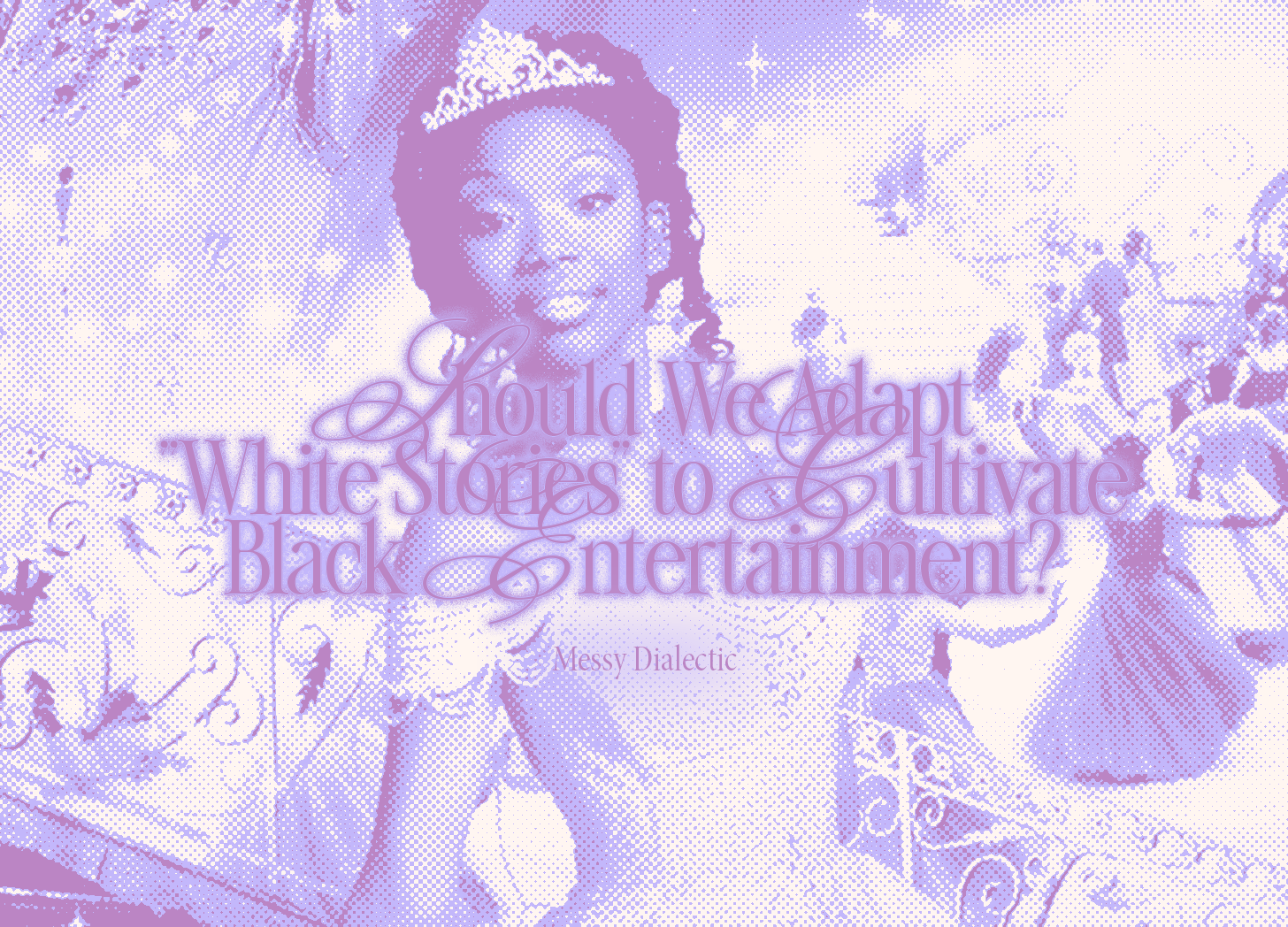
“Black Versions” of media have always existed in the entertainment sphere. From Brandy playing Cinderella alongside a diverse ensemble to Halle Bailey playing Ariel, in many ways we have all come into some sort of contact with a Black individual playing a traditionally or historically “white” role.
Although white individuals continue to play the roles of those who are blatantly BIPOC without a hitch, even the casting of Black individuals in mythological, sci-fi, or fantasy roles is still frowned upon due to the white-adjacent preconceptions attached to these genres. As a result of Black (or even BIPOC) folks continuously being cast in these roles, there has been an outcry for Hollywood to cease with the casting of melanated individuals in these roles and instead create original works that have diverse casts instead. That way we could—as some describe it—actually have progressive works in media, rather than writing over an old work in the name of diversity.
However, the answer to cultural inequalities in the entertainment industry is not as cut and dry as simply creating more original works for Black/BIPOC individuals to star in. Take for instance this short video which sums up the issue succinctly:
Despite this video being 13 years old, the sentiment carried is still quite relevant. Although more original Black works have come out since the creation of this video, there is still an overwhelming diversity issue in Hollywood that is continuously being rectified with the occasional casting of a Black individual in a “white” role. With racial biases still governing an industry that takes millions of dollars to create each product, it is simply not an easy decision for any executive to grant that level of funding to original Black works. However, it will always be easier to invest in Black castings for preexisting “white” media as there is already some sort of fanbase attached to it that validates its potential as a money making opportunity.
Although these castings are not curing the world of racism per-say, they still hold their own ground as a strategy to be used for increasing diversity and inclusion on the big screens.
The Skillful Retelling of a Classic Story — The Diversification of "White Media"
Although The Bennet Women doesn’t feature an entirely Black ensemble, it features a Black character as “Elizabeth Bennet” who is originally white in Jane Austen’s text Pride & Prejudice. After looking over the characters in the Austen text against the characters in the Kubi text, I feel as though Elizabeth Bennet and Mr.Darcy’s stories are the focal point of the adaption with all of the other characters (like Jamie and Tessa) being additions that Eden Appiah Kubi crafted to create a world that is truly her own within a story that is truly as old as time.
This personal touch truly helps The Bennet Women to stand out from a crowd of media seemingly “forced” to be diverse, and transforms the book into a story that lovingly appears to be a work that stands on its own easily.
I never fell into any particular camp that was for or against the diversification of media by way of changing white characters to Black/BIPOC ones, however, this book definitely taught me that there is a certain tactfulness that one could possess that could really let a story shine without the focus being on the fact that it is an adaption of a so-called “white” classic.
Not to mention, the touches that made “the Bennets” an all women’s school, along with a transgender bestie and a plus sized Asian bestie? And then the fact that they all had very distinctive struggles in love and relationship and all sought to handle them in different ways that were akin to their individual personalities? Not to mention the conversations that Elizabeth, or EJ, has to tackle with her family and her school advisor as she prepares for her post-graduate future? There were just so many great touches that made this a coming of age story that is now a classic in my own personal home library.
The Future of Black Artwork & Media
As social media allows for an “open access” of sorts for regular folks like you and I to ascend to greater heights, Black individuals are using these new tools for success to create and pave their own fame and fortunes. With this, there are so many new independent, traditional, and self-published creations with Black and diverse teams and castings. Take for example Kiana Khansmith, a Japanese and Jamaican Storyboard Artist & Director, who has taken the blerd/nerd side of the internet by storm with her pilot episode of “Pretty Pretty Please I Don’t Want to be a Magical Girl”:
Or, maybe even Jacque Aye who has published several books that center Black characters in worlds that are typically viewed as “white”, such as fantasy.
There are so many more examples of how people are pushing the envelope and creating works of art that feature Black and other BIPOC characters in new and exciting ways. I am entirely optimistic about the future of Black media, and while I recognize that we have far to go before things are perfect, we have to take the wins where we have them and then use our time and energy to simply continue to progress towards our goals.
Further Reading:

Ghost in the Shell’s whitewashing: does Hollywood have an Asian problem?
Whitewashing v. Blackwashing: Structural Racism and Anti-Racist Praxis in Hollywood Cinema