

Stop Televising the Discotheque
And other meditations on partying for clout

Imagine spending money just to say that you went somewhere, except that “somewhere” wasn’t a top travel destination or a Michelin star restaurant… It was simply a party or a concert.
You don’t know the songs, and quite frankly, you don’t care about the songs either. You’re not even happy to be there.
You’re just happy to take photos and videos to show your social media enviers that you were there and they weren’t. That alone is satisfying enough.
Introduction
What a bizarre junction that we’ve reached as a society. Yes, being at certain events and parties has always been a symbol of status, but this is quite different. People (particularly rich folks) are now using niche and underground events and artists as spaces to flex and flaunt their wealth, connectedness, and “coolness” despite not caring deeply about the performer or performance whatsoever.
The funny part is that while at these events, these individuals will make little to no effort to be an active participant. At concerts, they probably don’t know the songs, so they don’t sing or even attempt to mouth the lyrics. At discos, raves, and other genres of DJ shows, they stand within frame of the cameras capturing the DJ’s set, and barely move a muscle when the greatest, most mind-bending samples and transitions are playing. At festivals, you see a larger emphasis on fashion choices and capturing footage of celebrity attendees rather than the enjoyment of the music. It is truly bizarre.
These spaces that have existed for the enjoyment of art and culture have now been completely dismantled into places that clout-driven individuals wander to just so they can say that they too, were in attendance.
With an intense election cycle and hit after hit of insane news, we’ll spend time talking about an incredibly first-world problem that matters, but also doesn’t matter too much in the grandest scheme of things.
Social Media Made the Underground “Cool”
With nerd-culture, braces, and reading being rapidly thrust into the limelight of mainstream culture, it was only a matter of time before underground music cultures came to the forefront of mainstream trendiness too. Now, we have social media feeds full of alternative and punk appearing influencers who do not align with the ideologies that are behind the articles of clothing that they adorn themselves in, and caricatures of what a good time looks like by individuals who don’t even know the genre of music being blasted on the speakers.
Unfortunately, like many problems of today’s digital society, the issue continues to be social media and how it is utilized in today’s world.
Nowadays, younger generations are using social media to get an understanding of what is truly “in” and “out” of culture, and where the “it crowd” spends their time. On these platforms, there is a notion that virality rewards tastemakers and that if one were to go viral, then it is for “proper” reason. This staunch belief in the algorithmic overlords that keep us glued to our devices is exactly what keeps posers in spaces that are now getting rewarded by algorithms on all platforms.
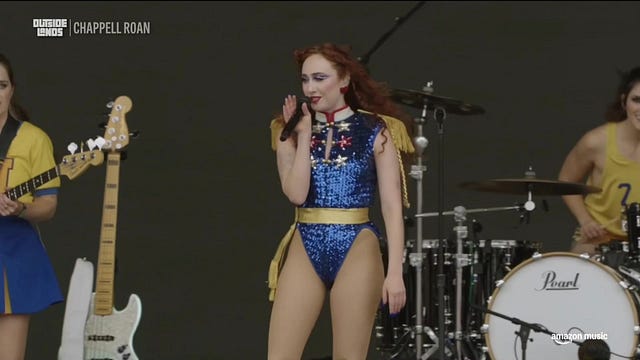
Take for instance Charli XCX and Chappell Roan who each had fame of their own within their own niches and communities before social media exploded them into full blown stardom. When these two artists were performing for their communities in the past, they didn’t have to deal with issues like these at their concerts:
 Tiktok failed to load.
Enable 3rd party cookies or use another browser
This song and dance of Chappell Roan calling out VIP and other high tier sections of festivals has become an ongoing trend as people buy out expensive tickets and occupy space on the barricade to get a premium view of her shows. Of course, let’s also not forget this occurrence:
 Tiktok failed to load.
Enable 3rd party cookies or use another browser
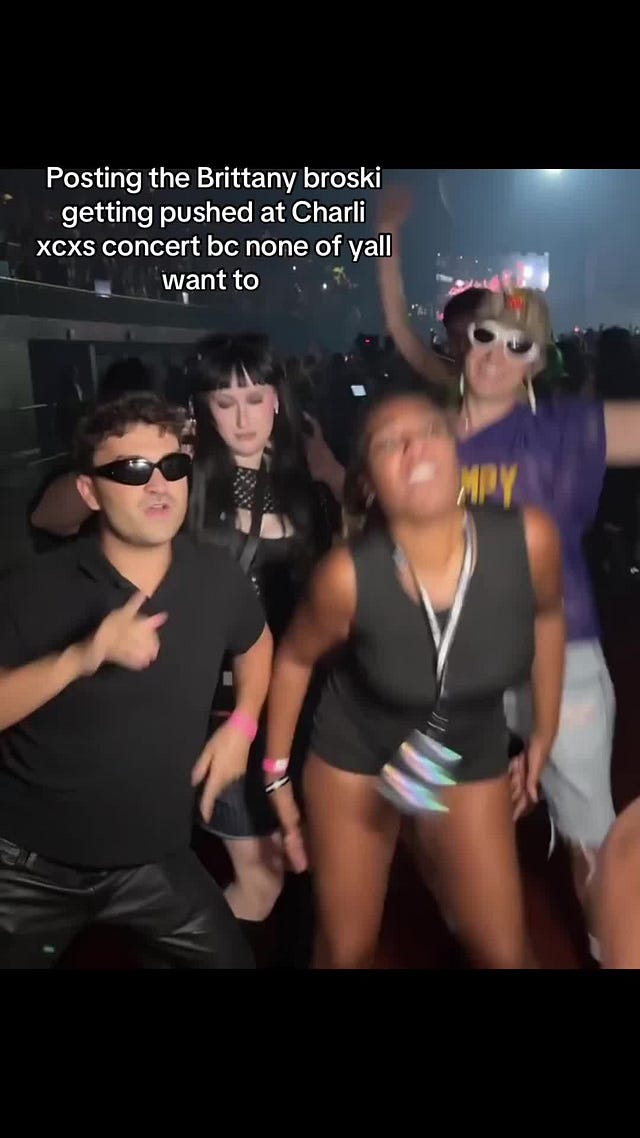
At one of Charli XCX’s concerts on her Sweat Tour, several rabid fans who also wanted a few seconds of clout and fame pushed fans out of the way (one of which happens to be a prominent internet personality) while they were performing the “Apple Dance”. It’s worth noting that these four individuals were chosen to do this dance (a different set of concert goers are chosen at each tour location), and it’s worth noticing that the individuals who barraged into the space made no effort to do the dance, and only wanted to insert themselves into this moment because of the virality each Apple Dance had accrued on social media with each location Charli XCX performed at.
The tickets to these concerts and festivals are nowhere near cheap, and the virality of these and other artists’ content doesn’t help a true fan’s desire to see their faves on the big stage, and raises many questions about who gets to inhabit what spaces.
Repackaged Elitism — Modern Day Status Symbols
A common motif of many topics that I will be discussing on this blog is how symbols of status morph as time progresses and we evolve culturally. In the 2000s, there were a slew of status symbols related to high end brands and their flashy, iconic logos. Now? It can be as simple as showing that you were somewhere that other individuals weren’t connected or wealthy enough to be.
Take for instance Zack Fox who recently did a set with Boiler Room a couple of months ago:
I jammed out to the entire set so you wouldn’t have to, but it is thoroughly worth listening to. DJing is a skill that not everyone has, and it is clear to me as someone who loves this space that Zack Fox truly has a talent for it. He fluctuates the tempo of his set to create perfect pockets of dance and rest, while also just having a flat-out incredible ear for music.
His music curation skills are amazing (there’s like a four minute praise break in the middle and it was insane), and it is great to witness someone who has this much talent be awarded their flowers while they are young enough to continue to enjoy the spoils of their skillset. For further listening jamming out, I highly recommend his set with Elevator Music, which also shocked me as that video was my first interaction with his DJing prowess, and it certainly wouldn’t be my last.
Something that I had noticed while watching was that everyone was mostly chatting, standing around, doing a slight bob-and-weave, just using their phones to take selfies or scroll, and waiting for someone else to dance before doing so themselves. As someone who has gone to both raves and mosh-type events on both a large and small scale, it was just so funny to me to watch moments like these where you can hear the crowd cheer as the song splices into a new beat, and then the camera pans to the crowd and no one is really dancing. The people who are directly behind Zack Fox kinda start to begin to dance, but it’s almost as if they give up on their pursuit to let loose because no one else is doing so en masse, and heaven forbid they stand out at a Boiler Room event.
This rhythm happens for just about every major song change Zack Fox does throughout his entire set. He switches the song ➡️ Everyone jumps around and looks around in excitement ➡️ About 5-15 seconds later, everyone defaults back into standing, swaying, and looking “cool” for the cameras. Watching his set with such a magnifying glass turns the set into this constant temperature check tug-of-war to see what is considered “cool” and “safe” to do in the space at each moment and what isn’t. It’s like everyone is monitoring themselves against a crowd of people who are more fixated on themselves and how they look versus the artist who should actually be the focal point of the performance.
What struck me too, is that everyone at this Boiler Room event is so very stylish. It’s not that they can’t be stylish, but it almost seemed antithetical to the point of being at a rave/dance event. I’m seeing full on jeans, a lot of unbreathable fabric, yoga pants, unopened fans (which yes, do have a role in rave events other than keeping you cooled down in the sweaty environment), and larger sized handbags and shoulder bags. It just didn’t seem very practical or enjoyable for the night that they intended to have when you look at the surface level of why someone would attend an event like this.
But when you look at it more deeply, you realize that everyone knows they’re on camera, and that hyperconsciousness is why they’re there in the first place. It’s Schrodinger’s Virality after all; as long as they attend, then they can assure that they are a part of the viral moment that could happen at Boiler Room’s Zack Fox set. As long as they make sure to dance, cheer, and look like they’re having tons of fun at every song shift, then they could make sure that they look cool during one of the potential viral moments to come.
Since Zack Fox and Boiler Room are constantly rewarded by the algorithm, it was just bound to happen again. And this time, they were there to experience it in the flesh.
Instead of offering up a different DJ set for comparison, I want to offer up the same event, but we’ll skip forward to just around the 1 hour mark. As the crowd shifts and a few new characters emerge behind the DJ booth, you can clearly see an energy shift take place as his set continues to unfold. You can see that the new individuals are connecting with the music, dancing, and enjoying his set regardless of how manic their dance moves are and how sweaty they appear to be. They are jumping, gyrating, and smiling so hard that they’re making the camera shake at some parts. Even if their fun is a performance and an act for the cameras, it is infectious and looks as if they’re actually having fun. You can also see how their act of bravery to be their fullest selves affects the original crowd of people behind Zack Fox (some of who, are constantly keeping tabs on the new group’s dancing rather than Zack Fox throughout the performance), and how that, in turn, causes them to dance more than they had prior to their arrival.
The energy shift is palpable when comparing the earlier minutes of the set to the hour mark of the set.
Do Superfans Deserve More?
Although I’ve said everything that I’ve said prior, it also requires several considerations. For instance, who are any of us to declare who a fan “is” and “isn’t”? For all I know, the people who were dancing the least behind Zack Fox could have been his biggest fans, and vice versa with the people who were dancing the most behind him towards the end. None of us truly know how much of a fan anyone at that Boiler Room set were, and that also goes for the Charli XCX and Chappell Roan performances. All of these things are true and fair considerations to make as we criticize people who are put on the internet for our consumption and entertainment, and also for the commodification and financial abundance of influencers, corporations, and businesses.
However, there is another consideration to make, and that’s for the fans who are willing to engage with an artist’s art at a level that truly shows their appreciation and enjoyment of their art regardless of how many cameras capture them. There is a stark difference between people who are at a concert and are spending their time standing and filming, and those who are at a concert and know that they will be waking up sore and voice-less the next day. The biggest consideration of all is that we viewers behind the screen are not the only ones who notice these differences. The artists are noticing too.
All levels of fans can end up at the same concert or set, but it’s where they place themselves that tends to cause strife on the internet as more events are televised. We are now seeing people who are not truly engaging with the art being shown at the front of crowds or in the VIP sections, while fans who know all of the lyrics or who are willing to dance all night further back, and out of frame of the immediate cameras and the star on stage.
The issue is that now, the underground has been launched above ground, and everyone knows what it looks like, sounds like, and feels like to be a part of a niche community. This definition of “underground” that I’m speaking of also includes the niche of immense fandom within larger collectives. With social media providing the “cool-factor” validation of virality for some artist’s fandoms, it makes the once “underground” world a battleground for individuals who live, speak, and breathe these communities as a lifeforce for their own lives against those who want this momentary validation of virality regardless of if they want or care to be a part of the communities they force themselves to inhabit.
It also doesn’t help that by inserting themselves and creating content about it, they also put themselves in the line of fire for virality, which could also help to catapult their own online careers into the throes of more financial abundance. You can read more about this topic on my post about The Ethics of Going Viral:
The Ethics of Going Viral

The problem started long, long ago, when corporations and individuals discovered the blueprints to success. With this cheat code, anyone could be truly be famous. You just have to be willing to do exactly what it took no matter how it made you look.
To conclude (and to keep it light for today), there is a larger topic to be had here about the momentary shifting of once “uncool” aesthetics and genres into “coolness” all because of the social media algorithms dictating it so (and the aftermath of what happens when the algorithm no longer deems the niche “cool”), the fabrication of identity that comes with algorithmic shifting, and also the surveillance culture of society that many individuals not only buy into but also contribute to by using that to influence their money making decisions and purchasing power. We’ll talk about those larger issues a different time.
For now, I will say that this is an issue that I feel will balance itself out as do all fandoms and niches in today’s chronically online world. As the social media algorithms no longer push a certain form of content, the appeal to be there and to show out as a “lesser fan” will decrease, and the “true fans” will be back at the helm of these concerts and events, allowing them to give their artist the attention that the artist deserves, which is adoring (and respectful!) fandom and engagement with the art that has taken time for them to craft and develop for their audience. This isn’t an issue that we can alter with brute force and irritation. This is something that will simply ease up with time as it always does.