

The Ethics of Going Viral
Your fake internet persona has real world consequences.

The problem started long, long ago, when corporations and individuals discovered the blueprints to success. With this cheat code, anyone could be truly be famous. You just have to be willing to do exactly what it took no matter how it made you look.
Or, maybe you prefer to look famous so that you can become famous, well that has a blueprint too. Just spend your money and run your cards up with expensive trips and luxury car rentals and make sure you take photos to show your audience that you’ve “made” it. These days, even the idea that you’ve got it “like that” can propel you to the riches that can make your fake feed a reality.
What’s wrong with faking it until you make it? What’s wrong with faking it all to the way to the grave?
If you could lie your way to riches, wouldn’t you do the same?
Introduction
Virality in the context that I’ll be observing is a complicated issue to critique. It’s not that it’s hard to form an opinion on the ways in which people are conducting themselves online, but it’s more about the societal impact that virality can allow for. Everyone has the opportunity to change their life by going viral no matter their religion, race, upbringing, location, political view, or even age. We have seen individuals who have changed their lives for the better by going viral and making enough money to buy a house all because the algorithm awarded their content creation.
But we have also seen how virality can allow for life-ruining accusations, like when it was alleged that a TikTok user raped a women who he had never met. This all came about simply because a person made a video that spread like wildfire. There was no proof, no information, and no confirmation from the woman who was portrayed as the victim in this scenario. It was just a video edited in a way that elicited a knee jerk reaction. Since then, both parties have said that not only did this not happen, they also didn’t know one another.
This gives virality a terrifying slippery slope.
With the ongoing recession and the growing discontent with late stage capitalism (among other things), it makes sense that individuals with access to a phone and a few hours of free time would rather use that time to build an internet persona/brand that could eventually land them into the throes of financial freedom. In reality, any of us could be one video away from a viral video that projects us to having our own podcast like “Hawk Tuah girl” and her new podcast Talk Tuah or starting your own brand like the “Pink Sauce Lady”. The issue comes when we would do anything, and absolutely anything, to achieve that freedom.
Doing Anything for Views
I remember when “mukbangs” began to come around the internet scene around 2015. ABC News describes them as:
"Mukbang," which is a term that originated in South Korea and translates to "eating shows," involves content creators posting videos, sometimes more than an hour long, of themselves eating mostly junk food. In some instances, they take on exorbitant amounts.
As I went through my college years, I saw more and more mukbang creators trying their hand at the globalizing trend and personally, I couldn’t get into the content. Some folks would combine their consumption with a podcast while others would eat food in grotesque—and in some ways fetishizing—manners. But at the end of the day, the content was the same: there was an overabundance of makeshift food challenges and overconsumption.
When Googling or Youtube-ing the genre, a face that appears often is a user by the name of Nikocado Avocado. Mukbang aficionados will definitely be familiar with this name, as he is a sort of forefather of Mukbang content in the United States. His personality is incredibly loud, larger than life, and unfortunately toxic and problematic. He has several videos where he and his husband fight one another physically or engage in other kinds of inflammatory relationship content together. Meanwhile, they’re doing all of this while progressively gaining an extreme amount of weight with no end in sight.
In typical individualist fashion, we can all sit and say the typical adages of “well that’s his life, if he wants to ruin it then who cares,” or, “I think his content is entertaining and funny,” or maybe even, “none of it is real, nothing on the internet is real. Who cares?”
Well, the problem comes when we reward harmful and inflammatory content creators with unlimited fame and exposure.
“Two steps ahead. I am always two steps ahead.”
On September 6th, 2024, Nikocado Avocado fans woke up to a new video titled “Two Steps Ahead.” At the time of me writing this, the video has amassed more than 46 million total views. The video features a smaller framed Nikocado wearing a panda mascot head who speaks with a calm and seemingly calculated voice. He begins the video by saying, “Two steps ahead. I am always two steps ahead.”
Before conducting a mukbang, he unleashes a Joker-esque monologue detailing his grand scheme of using old videos on his channel to maintain his career while losing weight and becoming healthy in the meantime. He calls all of this “the greatest social experiment” of his entire life while also calling his audience “peasants” while chatting with his bird.
The comment section oozes support and awe for Nikocado. Commenters commend him for losing the weight (which is definitely an incredible accomplishment), but they also applaud him for fooling the world, “redeeming” himself, and most importantly, for “being the villain”. People are begging to see a Netflix documentary to get the scoop on his master plan to illude the masses in order to ascend to a millionaire lifestyle while also being a villain along the way. His audience is entranced and hypnotized by this unfathomable plot twist.
A situation like this further highlights the issues with virality while also reminding us that the internet is ever so forgetful.
Even if the fights with his husband were fake, the damage that he has done is real. Nikocado Avocado has created a blueprint for other content creators to recreate in the name of achieving their own social media success, so long as they’re willing to destroy their bodies and the lives of other content creators.
Even if his drama-loving internet persona was all bait for his “social experiment”, he still attempted to ruin the life of fellow YouTuber Stephanie Soo by aggressively bullying her, threatening her safety, and attempting to turn the internet and the people around her against her.
Among other things, he abused the copyright strike system to strike down other YouTubers who were not violating Fair Use Laws, he faked having health conditions in order to garner sympathy and attention from his audience, and he also created drama with other YouTubers just for content and views. His career has been built on malice, commodifying overeating, and unapologetically causing problems for other creators, and the effects of that do not dissipate because he decided to better himself.
The Consequences of Controversial Content — A Moment of Reckoning
Some YouTubers who go viral for unsavory reasons have the privilege to directly face the monster that they have created. Take for example the creator iDubbbz who has been a popular content creator on YouTube for well over a decade. He was primarily famous for his series “Content Cop” which featured his critiques and deep dives of problematic YouTubers and other content creators at the time. The videos featured silly skits, clips, and information to help his audience understand why we should put a spotlight on these creators and give these individuals less views and engagement.
However there was a fatal flaw: iDubbbz himself was the very type of individual who deserved a “Content Cop” level of scrutiny.
In a 2023 interview with Anthony Padilla, iDubbbz speaks candidly about his fan-interactions, and how displeasing they have been. He states that on numerous occasions, he met fans who sucked because he “attracted a lot of people who suck.” He describes these fans as “anti-social, weird basement dwellers” who would say words to him that “we only say by describing the first letter.”
“These are the people that I'm attracting. These are the people I'm entertaining. I need to reevaluate things. They are relating and enjoying this content for a reason, and that's not maybe the same reason that I'm trying to make.”
Unlike Nikocado Avocado, iDubbbz has worked to state his disgust with the old inflammatory content that he has created, and has even gone as far as deleting all of his Content Cop videos. However, as we all know, nothing can be deleted from the internet.
It only takes a cursory glance to find his old controversial content. You will see countless reuploaded videos of him going to an old Tana Mongeau meet and greet and saying the n-word (with the hardest of r’s might I add). He reasons that he did so simply because of her past usage of slurs and racist insults.
Ethan Klein, creator of the H3 Podcast, compliments iDubbbz as being “rhetorical and smart” for his “usage of the n-word,” in contrast to YouTuber PewDiePie who was “a little too comfortable” using that word. Meanwhile, there are countless clips that show Klein and iDubbbz using the n-word (among other slurs) back to back, seemingly just for fun during his 2017 interview on the H3 Podcast.
iDubbbz was right in his 2023 Anthony Padilla interview to say, “These are the people that I'm attracting. These are the people I'm entertaining. I need to reevaluate things. They are relating and enjoying this content for a reason, and that's not maybe the same reason that I'm trying to make.” Now, even the comment section on reuploaded videos are filled with comments claiming that iDubbbz was using the video in a “comedic” or “satirical” way, or that he’s using the word so heavily to be a hero and “desensitize us all” in order to diminish the hurtful qualities of the word, or even that he’s using the word simply because he wants to, and that’s all the rational he needs as a straight, cis, white man. Simultaneously, the comments demand that we should all “get over” his usage of the n-word and all of the other slurs that he utilizes, because after all, it is “just a word.”
iDubbbz has spoken on numerous occasions since then about how he doesn’t stand by his old controversial content. Since then, he has pivoted his new content to a more tame and mild vibe compared to the pure unhinged and unfiltered content of his past. These are all great changes to have been made, however, it doesn’t take away from the fact that he has not only achieved financial freedom by platforming bigoted ideologies, but he has also highlighted yet another harmful blueprint that can be followed for financial gain.
Jesters of Society
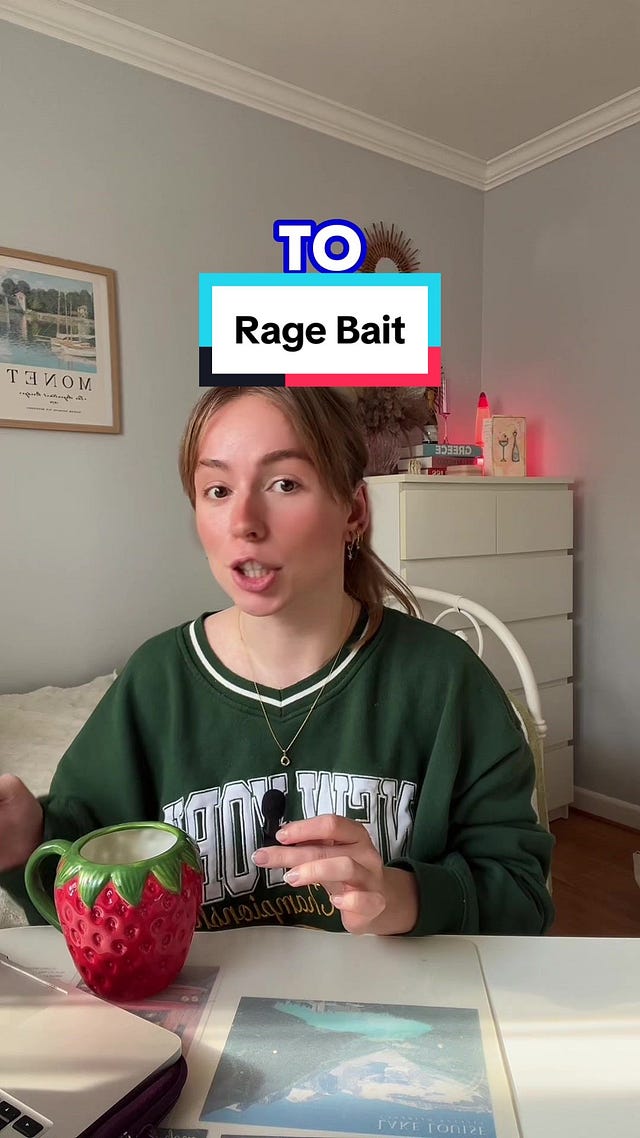
On today’s modern internet, you can find makeshift iDubbbz and Nikocado Avocado clones anywhere. With algorithms rewarding damaging content more than ever, content creators are even resorting to a genre of content called “ragebait” in order to garner views, attention, and most importantly, money. This can range from toxic carousel posts to faked arguments about hot-button issues that will provoke arguments and support in the comments. All forms of content is being created to create the type of engagement that could change someone’s life forever.
 Tiktok failed to load.
Enable 3rd party cookies or use another browser
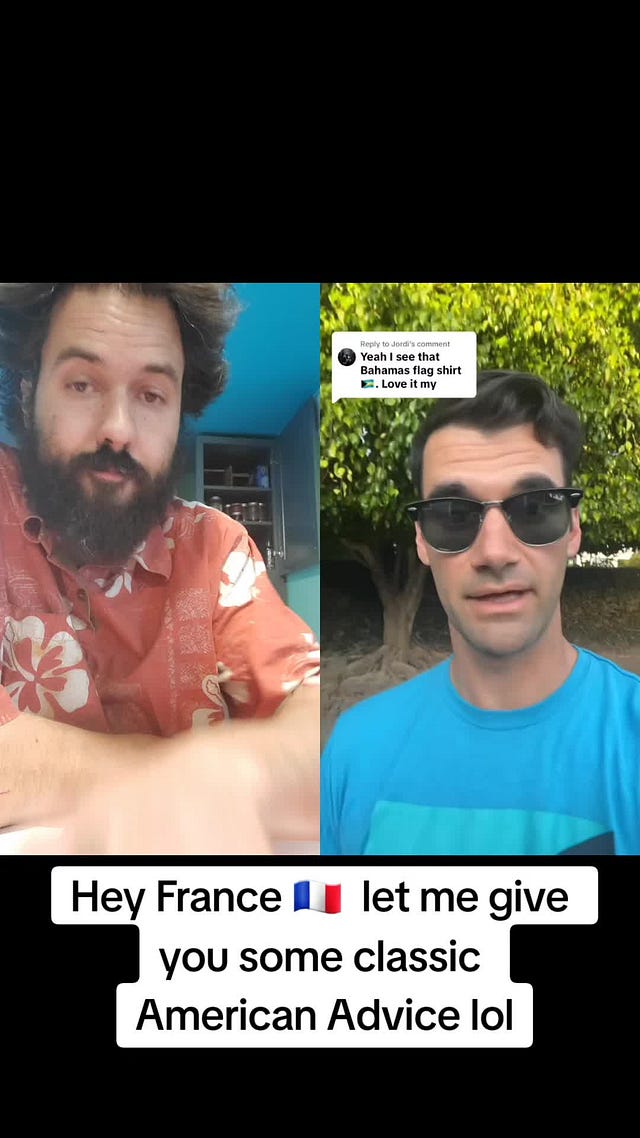
There are even individuals who create fake news stories and frame them as real events that have occurred. Take for example TikTok user thesephew, also known as TheRobbyShow, who only notes that his content is “Fictional Stories and Satire” on his profile page. When it comes to his countless faked stories, like the “Hot Chemist” who caused an explosion from her bar beverage with a solution that exploded when spiked with drugs, or the “6’6" Texan Man” who threw a pickpocket down the stairs at the 2024 Olympics after failing to steal from the Texan man, TheRobbyShow doesn’t explicitly state in his comments or the video description that the “news” that he is spreading is all made-up.
He utilizes hashtags that would work for any regular content being created on the app, such as #revenge, #meetcute, and even #storytime, but doesn’t provide information or hashtags that would convey to the viewer that the content being consumed is fake. The only indication is on his profile page (which the average social media scroller wouldn’t bother visiting) or from the few comments that educate viewers about the fabricated nature of his content. To make it worse, these videos are shared to audiences outside of TheRobbyShow’s viewer base as real stories that happened, causing even more unnecessary, divisive, and sometimes aggressive, discourse in comment sections like in the video below.
 Tiktok failed to load.
Enable 3rd party cookies or use another browser
At the time of me writing this, this video alone has nearly half a million plays, and that doesn’t even include all of the other users who have watched and spread this video around to their corners of the internet as a factual event that happened during the Olympics. The comment section is rife with Europeans explaining the legal system and how it protects pickpockets, arguments and excitement about how “American” it was for the “Texan Man” to throw the pickpocket down the stairs, and even how we can’t blame the “Texan Man” for his violence because of how filled with adrenaline he must have been when he was being pickpocketed.
All of this worldwide discontent and jubilation for a news story that doesn’t even exist.
It is a community effort to keep the internet a safe and hospitable place for everyone, but with the way that virality can cause information and content to spread, hospitality and trust on the internet becomes an impossible dream. There are individuals all over TikTok, Instagram, Substack, and even major news outlets who attempt to educate their audiences about the fake and curated nature of social media content, but with Instagram alone bringing in an average of 100 million photos per day, we have an issue that has grown far beyond any well-meaning community’s bandwidth.
It is because of all of this and so much more that we should be careful as a society about the content that we put out there and engage with. Even exposing people to the notion that certain types of content can net massive amounts of fame and financial gain can be deadly in the wrong niche because some individuals will truly do anything for views. Some individuals just do not have a good enough moral compass to grasp why we shouldn’t just do anything for views, and are also not mindful enough to utilize a critical lens when posting content onto the internet. Many people are simply not community conscious enough to wield a power that could affect the greater collective in negative, longstanding ways.