

Your Small Business Probably Doesn't Need to Exist
Our personal responsibility as small business owners to simply do better in a market dictated by big box, corporate machines

Please note: This post is too long for email, which means that it may cut off at the end if you prefer to read through that medium. Please be sure to check out the post on Substack to ensure that you’re able to read the full post. Enjoy!
Introduction
Back in 2019, I started my business as a solution to the crappy job market that I had graduated into. It was a skincare business that I solely began because making skincare is something that I knew that I could both do, and do well due to my years of making skincare to heal my chronic, painful, cystic acne, so it felt like an easy choice to make money as I navigated my post-grad unemployment. In addition, it doesn’t make it any better that COVID began soon after I had graduated and started my business, thus locking me in to being an entrepreneur for that time.
From 2019-2022, I ran quite the solo-business. I was formulating and making high quality skincare products from scratch, earning interviews in publications, made it to the semi-final round of a Black business owner grant, and even got a Black Friday business roundup feature in Yahoo! Finance. In this time, I was coding and programming my website, allegedly sneaking my catalogue of products into Ikea and doing full on photoshoots to navigate my lack of investments or funding, graphic design-ing all of my product labels and boxes, and researching actual scientific papers as part of the R&D for my products. I was electric.
Then, 2022 hit, and I honestly began to lose steam. Running a business at such a high caliber with all of the chaos that was going on in my life began to weigh on me, and I went on an indefinite hiatus that I remain on to this day.
As I went through the months (and now years) of my hiatus, I felt through all of the motions of being a business owner. I had incredibly high-highs, and upset, disappointing lows. I had customers yelling at me to “do better” by creating more organic and sustainable products and to “add X type of product” to my line, while also being begged to not discontinue or reformulate other products.
It taught me a lot about sustainable business practices, people pleasing, the entire product development process, and also taught me a lot about the true monetary value of the products that we can buy at our favorite stores and on our favorite websites.
Since my days as an artisan, I have grown many thoughts about today’s up-and-coming entrepreneurs and influencer businesses, from how they’re ran from a customer service standpoint, to an manufacturing and marketing standpoint. In addition, I’ve also curiously watched the ways in which the public has responded to some influencer products over others and have found so many fascinating similarities to this modern age of influencer products versus the old school days of the celebrity product.
It is certainly interesting and worth examining as online businesses take over store shelves in even clandestine ways that would never make you guess that an online figure was behind the product all along.
Steeped in Greed & Vitriol—How Dare You Criticize My Business
Despite the “personality” and “relatability” that separates old school celebrities from today’s influencer, influencers seem determined to traverse the same monetary bounds that celebrities charge through as part of their “celebrity” title. We see this time and time again as influencers continue to release products that, typically, have nothing to do with their core branding or audience. At this point, it seems to be a rite of passage to create a business or release a product (or two, or even three) that solidify the fact that you have “made it” as an influencer.
Take for instance, Pokimane’s Myna Cookies, Ryan Trahan’s Joyride Sweets, Emma Chamberlain’s Chamberlain Coffee, or the countless other influencer products that plague the market. It’s bad enough that influencers are following the same plight as celebrities by oversaturating markets and releasing random products that no one asked for, but it makes it worse when you realize that these influencers are also doing this as a profitable business opportunity rather than for the love of the craft.
Influencer businesses like Lunchly come to mind immediately when thinking of influencer brands that exist simply to maximize profit margins. KSI and Logan Paul’s PRIME has combined together with Mr.Beast’s Feastables bar to create Lunchly, a modern competitor to the Lunchables meal kit.
On the surface, this appears to be a potentially positive thing, especially since competition can be great for society, but the problem comes when taking a closer look at Lunchly and its claims of being a “healthier competitor” to Lunchables.
The Lunchly website claims to be “Delivering the Dream” with lunch kits “designed by today’s internet icons”—two things that maybe shouldn’t be factors when marketing to younger individuals—along with other fluffy language designed to set themselves apart from other meal kit brands, such as them describing their product as being the “life of the lunchroom”. However, there is a page labeled “Us Vs Them” that highlights the nutritional differences that set them apart from their competitor, Lunchables.
In order to have the nutritional details properly articulated, I’ll be sharing this video from Doctor Mike, a certified family physician based in the US:
In the video, Doctor Mike details many of the nutritional problems of the Lunchly product, such as how they’ve rebranded sodium as “electrolytes” in order to contribute to their narrative of being a “healthier” alternative, and even how the Lunchly product itself doesn’t even contain enough calories on its own (per USDA caloric guidelines for children) and that if a child were to eat multiple in order to meet these caloric standards, they would be consuming about 1300mg of sodium. This is far out of bounds of what is okay for a child to consume.
As Doctor Mike states, Lunchly, like Lunchables, “misses the mark too many times to be considered meaningfully healthier”.
To make things worse, since Lunchly has launched, Mr.Beast along with both Paul brothers and their associates have slung vitriol at those who dare speak up about the negatives that Lunchly brings to the lunch table, and even those who have made mistakes when speaking about the Lunchly brand.


As a business owner, I understand taking pride in your business and being confident, but there is no reason to sling vitriol against others for receiving valid criticisms for something being marketed to children.
As stated in the introduction, I had my fair share of criticisms even in my short period of actively running my business. I still remember the micro-drama that ensued online over my usage of a preservative with the INCI “Propylene Glycol, Diazolidinyl Urea, Iodopropynyl Butylcarbamate,” when first starting out my business. My customers (both prospective and current) were upset that I was using a preservative with a formaldehyde releasing ingredient (diazolidinyl urea) and another ingredient deemed unsafe for aerosol usage (iodopropynyl butycarbamate).
At the time, I was really confused.
I began using that exact preservative based on a skincare formulating expert who has countless free resources on making professional grade skincare products at home, and she had never discussed these things. Not to mention, “green-beauty” was just beginning to trend online and on shelves, so I had never even heard of eco-friendly beauty products prior to being called out.
Rather than getting upset or angry with my customers, I proceeded to do hours of research and learned where I had gone wrong. I then proceeded to use a preservative with safer skin attributes (phenoxyethanol) and also reformulated every single one of my products to contain green, eco friendly extracts, oils, and butters from then on. This also meant that I had to purchase brand new product labels with updated ingredients, thus rendering the prior labels null and void. These expenses were worth every penny for the trust and safety of my customers, and I don’t regret any part of it.
Businesses like Lunchly highlight that whether it’s on a macro scale or a micro scale, we all have the choice to be better than the gatekeeping overlords who reign supreme with their longstanding businesses, and in choosing to not do better, we become no better than them. If I had cussed out my customers or tried to make examples of them for bringing me their valid safety concerns (some weren’t very nice about it, I’ll admit), how would that make my small business any better than any juggernaut on the shelf at Sephora?
What, then, is even the point of me bringing my business into the forefront in a market dictated by capitalism and overconsumption aside from me lining my own pockets and setting myself up for fame and acclaim? If garnering fame and acclaim are my only two guiding principles, then what is even the point of starting a business in the first place? We don’t need another capitalistic monolith that solely exists to create profits for its owners and founders.
We, as consumers, need and deserve alternatives to a world of capitalistic endeavors that align every shelf at every big box store.
It’s okay to want to diversify your portfolio and offer different things to your audience. I understand the appeal for a rich person to want to diversify their earnings portfolio and allow for their eggs to be contained in different baskets. This helps to protect their rich lifestyle by allowing them to fallback on one income stream if another falters. Plus, it allows for bonus funds on the side that can be used for further self-investments (or whatever else they want to spend their money on).
But, do we need another celebrity fragrance? Another random influencer’s sugary food or beverage product with one beneficial ingredient featured as the “thing” that sets them apart? Another skincare brand from a set of investors who know all too well that the face of their brand achieved their “perfect skin” with the help of expensive skincare treatments, not from the products they’re marketing to you? Another cheap clothing brand made entirely/primarily of polyester but has an influencer/celebrity tax that makes the garments far more expensive than they should be?
Do we really need another?
The Cost & Business of “Better”
Doing “better” business comes with caveats. As someone who began to elevate their products and increase their pricing due to COVID price inflations, I know all too well of the price and cost of doing better business.
When I first began selling my skincare products, I started out by making huge batches of product. In time, I began to learn how cost ineffective this was, but in addition, I also soon learned of the tug of war that came with making smaller batches.
Making a larger batch of product didn’t take too much extra time on the formulation side, but it did add a larger strain with packing up products. However, when it came to smaller batches, they were just as exhausting as creating larger batches, and still resulted in me being too taxed to make any more products for the remaining day, let alone for the next few days. This meant that committing to making smaller batches would take up more of my time as a whole, and time is money.
There is also a monetary value that comes with making small-batch skincare as an artisan, and that value also came with its own price increase as my customers understood the price of having handmade, high-quality, fresh, eco-friendly, green skincare products.
Then, there were the rising costs of ingredients, especially for natural ingredients, during peak COVID era (and still have a lasting effect to this day). Before pumping the breaks on the business, I had shared this carousel to my followers to explain how I was affected by the price increases.
Each time I made my business better for my customers, it grated on me as prices steadily drove upwards. It was becoming unrealistic to provide such a rich, positive business without any funding at such a small scale. When purchasing larger quantities of supplies, the cost per item is typically lower. However, this is challenging, if not downright impossible at such a small-business scale. The price increases that I would implement had caused more scrutiny (and not just with my business, I watched other small businesses struggle with this too) and to be quite honest, it’s hard to keep running a business under those conditions without the necessary support.
In my own personal life as a consumer, there are many things that I utilize or support online that I would define as “better” businesses, but of course, they come with their costs. Take for example, Briogeo.
I am a diehard Briogeo stan, as one would call me. When I chopped off my quarantine locs and shaved my hair clean off, I took the time to experiment with brands that I had never used prior in my natural hair journey. Once I had reached Briogeo, I didn’t venture any further. Their Don’t Despair, Repair line was my favorite, and since then (after years of usage) I have transitioned to their Scalp Revival shampoo and their Mega Moisture deep conditioner as my hair has grown and changed. If you are familiar with Briogeo, then you already know that these products are far from cheap. Although they’re not affordable in the slightest, they are incredible, at least for me personally, and I can’t see myself using anything else.
As someone who ran their own natural skincare business, I am drawn to Briogeo because of their clean, plant-based formulations. But also, as someone who ran their own natural skincare business, I am very familiar with the high costs that come with working with natural ingredients and high quality extracts, hydrosols, and more. Due to my perspective, I am personally okay with the price that comes with a brand like Briogeo, because I understand that this is simply the price of shopping for products that are better for us. As an aside, I am also learning more about the communities that they positively impact, and in a way, this too is part of the cost of buying “better”.
In terms of brands that I don’t purchase from but support online, I have to shout out Popflex Active, a highly inclusive activewear brand by Blogilates (aka Cassey Ho). I have never purchased from this brand, but I do follow Blogilates on YouTube, and she constantly shows the new products that she’s releasing there and I’m always so impressed. She utilizes her creativity to create products that provide solutions to her customers’ needs, and the speed and effectiveness at which she does so is truly impressive. In addition, her products are size inclusive (both for size and inseam length) and have higher quality fabrics that at least feature lower amounts of polyester in the products that feature a fabric blend containing polyester.
However, these high quality products come with a price tag that many of her supporters have shown a reluctance to support, which has caused her to now consider creating a lower-end version of Popflex Active that would allow more of her fanbase to support her.
Now, although it is nice that she wants to have price inclusivity, I can tell that she knows (as many business owners do) that in many cases, lower prices do result in lower quality, which means that sacrifices and compromises will have to be made in order to produce a product that is cheaper than where her current product lines stand. Only time will tell whether she is able to produce a product that is “cheap” yet higher quality than your standard fast fashion outlet, or if she even goes through with the idea considering the challenges that come with producing a cheaper, high quality product in the first place.
Fighting the Good Fight
Some brands are simply doing their best to ethically fill the gaps that our current market remains plagued with. Take for instance, Rebdolls. They feature stylish (and in my opinion, very cute) pieces ranging from small to 5x. Their mission, as stated on their about page, is to “strive for great quality and well fitting clothes” for a wide range of sizes. Unfortunately though, it appears that most of their collection is made from lower quality fabrics such as polyester (however they do have pieces that seem to be made from higher quality fabrics such as cotton or linen).
I couldn’t find specific information on any other missions or values that the brand is working towards on their primary website (such as ethical sourcing of their products or fabric conscious production), but I was able to find more information on their Kickstarter. This information states how Rebdolls was able to secure a space in the Dominican Republic that, if funded, would allow them to continue to create the “sustainable, on-trend fashion” that they are known for. They work towards ethical labor business practices, and that is what sets them apart in today’s fashion market.
The progress that Rebdolls seeks to bring forth to the fashion industry is admirable, considering what the current industry reflects. In a 2023 blog post on the exploitation of garment workers, the Department of Labor states:
Last year the U.S. Department of Labor Wage and Hour Division’s Southern California offices embarked on an ambitious plan to investigate several contractors in the region’s large garment industry. We found that 80% of the contractors were violating minimum wage and overtime laws and we recovered over $892,000 in back wages and damages. We found one contractor paying garment employees $1.58 per hour in a state where the minimum wage was $15.
Mind you, these prices reflect what is happening on U.S. soil. This doesn’t even begin to paint the picture of how little workers are getting paid to create garments in other countries for fast fashion retailers. Fair wages come at a price, let alone the price of sustainable fabric choices, and many consumers simply don’t want to have to pay the price. With the increase in the price of materials, plus the continual rise in the cost of labor, along with the continuous challenges that consumers are dealing with to make ends meet, the act of supporting sustainable, ethical business practices or allocating one’s budget to high quality garments becomes a laughable endeavor when there are always cheaper, more accessible options available.
Screenshots of comments from the Rebdoll owner’s TikTok video where she talks about her business coming to a close due to a lack of funding and business growth:


Of course, this leads to an entire discussion about affordability in fashion and what consumers should be paying for garments, but we will of course have to have that expanded conversation a different time. The screenshots alone highlight the larger issue which is that many consumers are simply not willing to pay the price that fighting the good fight that sustainability, ethical business practices, and higher quality fabric options entails. Many people, it seems, just want to be able to buy their stuff at a price and quantity that is affordable for them, no matter the societal cost.
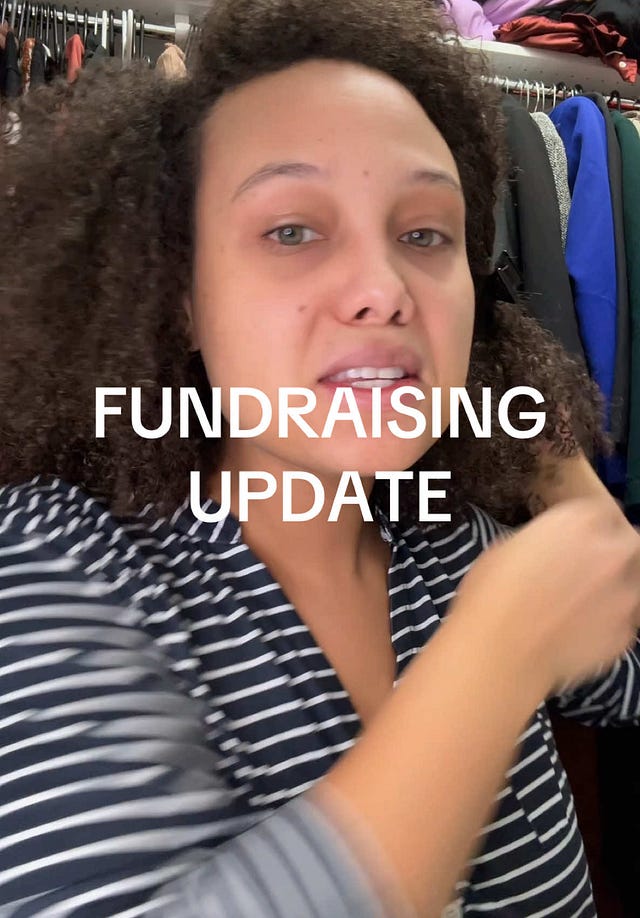
Because of this, Rebdolls may be going out of business. In an update video, the founder states how the Kickstarter’s supporters helped to “save their lives” and “finish the factory” that she would be using to provide ethical labor and wage standards for her employees, but she explains that as a DTC business that is not involved in AI, it is challenging to get the funding that would allow her to grow and maintain her business for the future.
 Tiktok failed to load.
Enable 3rd party cookies or use another browser
Rebdolls isn’t the only business that exists as a means to fight against the current societal standards that dominate the manufacturing and merchandising of goods. In my research on this topic, I even found a vegan caviar product being produced by French Chef Alex Gauthier. He was drawn to creating this dish due to his knowledge of the caviar industry and the process behind how this expensive delicacy is horrifically farmed from sturgeons. In learning of this, and also with his decision to no longer eat meat in 2016, he created a vegan caviar product that allows consumers to enjoy the briny taste of the sea that the rich adore without the grotesque farming practices that regular caviar requires.
There are so many business owners and product designers who are using their skills, talents, creativity, and willpower to intentionally create products for the good of the world without inklings of greed or malice. The world is a much better place when consumers have the ability to make better consumption choices due to the abundance of better things to choose in the first place. But things become difficult when money-hungry execs and manufacturing powerhouses use low rate labor, low quality goods, and predatory marketing practices to convince shoppers to spend money on products that not only keep us back societally, but also with products that negatively impact our health.
I don’t want to believe that things will always be this way; that consumers will continue to prioritize cheapness over fairness, or quantity over value. As time goes on, we will see if this push and pull between the recession and overconsumption, and virtuous businesses and high-caliber products will be the death of progressing society towards better business practices on a large, big-box, global scale. Or maybe, just maybe, we will make it through this economic collapse with new ways to make accessible products with better business practices in mind, and maybe we will find even more ways to highlight and “sell” sustainability to those who still believe that cheaper is always better.
Until we find out in the future, I will choose optimism for the present, and I hope that you all are able to find the means to do so too.